Teams have traditions. Teams have inside jokes. Teams have rituals. Teams have stories that only they understand.
Those little things, the ones that never appear in a curriculum guide or professional development session, are often what students remember most. Years later, they probably won't remember the worksheet from a random Tuesday in October, but they'll remember what it felt like to walk into your room every morning.
One of my favorite traditions happened whenever my students and I walked past the principal's office.
If we saw her coming, we'd freeze. Not because we were in trouble, but because she was secretly a T-Rex, and everyone knows T-Rexes can't see things that don't move.
Sometimes we'd army crawl beneath the office windows. Sometimes we'd stand perfectly still until the danger had passed. The principal always(ish) played along, and the kids thought it was the funniest thing in the world.
Here are ten simple ways to create that feeling.
1Give Your Class a Name
Don't settle for "Mr. Young's Class." Become Team 18. The Reading Rangers. The Wolf Pack. The Book Ninjas. Whatever fits your personality. We were the Youngenites.
When students begin referring to themselves as part of a team instead of just a classroom, something changes. They start thinking less about themselves and more about each other. Instead of asking, "Did I do a good job?" they begin asking, "How does our team do things?" Identity shapes behavior.
2Create a Class Chant
Every great team has something they say before the game. Your classroom can too.
It doesn't need to be elaborate. In fact, the simpler, and perhaps even sillier, the better. Maybe you ask, "Who are we?" and they respond, "Awesome second graders!" It doesn't really matter what the words are. What matters is that they're yours.
3Invent Secret Hallway Missions
Hallway transitions don't have to be boring. Some days you're astronauts walking on the moon. Other days you're undercover spies. Maybe you're ninjas sneaking through the school unnoticed. And if the principal happens to be a T-Rex... well, you already know the protocol.
These tiny moments of play turn ordinary transitions into shared memories.
4Create a Secret Class Handshake
There's something surprisingly powerful about a handshake that belongs only to your class. It doesn't need to be complicated. A fist bump, a snap, an elbow tap, and a high five are plenty.
Teach it during the first week of school. Use it before a field trip, after a class celebration, or when a student accomplishes something difficult. It quietly communicates something every child needs to hear: "You're one of us."
5Celebrate the Little Stuff
Too often we save celebrations for huge accomplishments. Why? Celebrate finishing the first chapter book. Celebrate everyone remembering their homework. Celebrate a student finally mastering something they've struggled with for weeks. Throw invisible confetti. Strike a victory pose. Dance for ten seconds.
Joy is contagious, and classrooms that celebrate often become classrooms where students are willing to take risks.
6Give Ordinary Things Extraordinary Names
Words matter. Don't send students to the reading corner. Send them to The Reading Cave. Don't rotate through centers. Complete missions. Don't gather on the carpet. Meet at Base Camp.
These tiny changes cost nothing, but they make your classroom feel like it has its own personality instead of looking like every other room in the building.
7Dress Like a Team
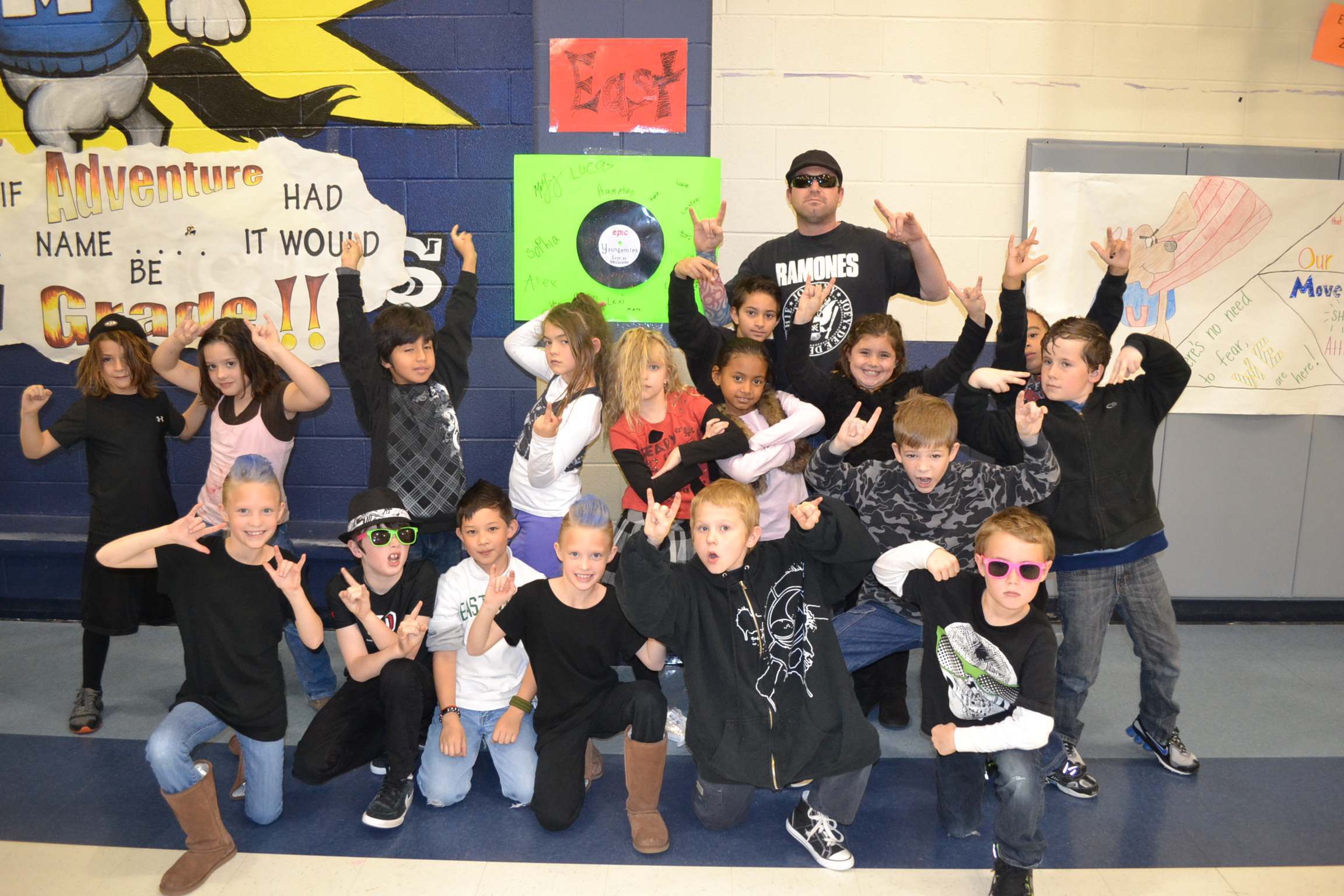
Whenever we had a field trip or school assembly, we'd sometimes pick a theme. One time we all dressed like punk rockers — the same day pictured above. You could wear crazy socks, school colors, sunglasses, or whatever sounded fun at the time. It seemed to have more power when no one else was dressing up.
The key is to keep it incredibly simple. Don't create one more thing for families to buy. Parents shouldn't have to make an emergency trip to the store at 9:00 the night before because your class needs pirate costumes or matching overalls.
The goal isn't a perfect costume. The goal is for students to look around the room and think, This is my team. Years later, when they stumble across that class picture, they'll remember exactly how much fun they had.
8Create One Weird Tradition
Every class deserves one thing that makes people walking by wonder what's going on. Maybe every Friday begins with thirty seconds of air guitar. Maybe Mondays start with a terrible dad joke. On Fridays I stood on my desk with my guitar and sang Weird Al songs.
The tradition itself doesn't matter. The consistency does.
9Tell the Stories Again
Every class creates legends. The day the hamster escaped. The glitter explosion. The mystery everyone solved together.
Tell those stories often. New students will hear them. Current students will smile every time they're retold. Before long, your class has a shared history that belongs only to them.
10End the Day as a Team
How you end the day matters just as much as how you begin it. Take one minute to reflect on something that went well. Celebrate a class success. End with a chant. End with your handshake.
Those final sixty seconds often become the emotional punctuation mark on the entire day.
The Little Things Are the Big Things
None of these ideas are revolutionary. None require funding. None appear in your pacing guide, but they're the things students carry with them.
Long after they've forgotten the worksheets, the quizzes, and even many of the lessons, they'll remember that your classroom had its own traditions. They'll remember laughing until their stomachs hurt. They'll remember pretending the principal was a T-Rex. They'll remember the handshake that only your class knew.
Most importantly, they'll remember what it felt like to belong. If you ask me, that's one of the most important things we can teach.
Want more ideas like this for your whole staff?
LiTerrific Professional Development brings research, joy, and classroom-tested strategies to schools and districts — Science of Reading instruction, taught artfully. Virtual, on-site, or ongoing coaching.
Book a Call →